
Inflation in stamp prices, wages
Lessons in compounding

Upon first blush, viewing a chart of the nominal price of postage over the prior couple of decades, might incite a strong reaction.
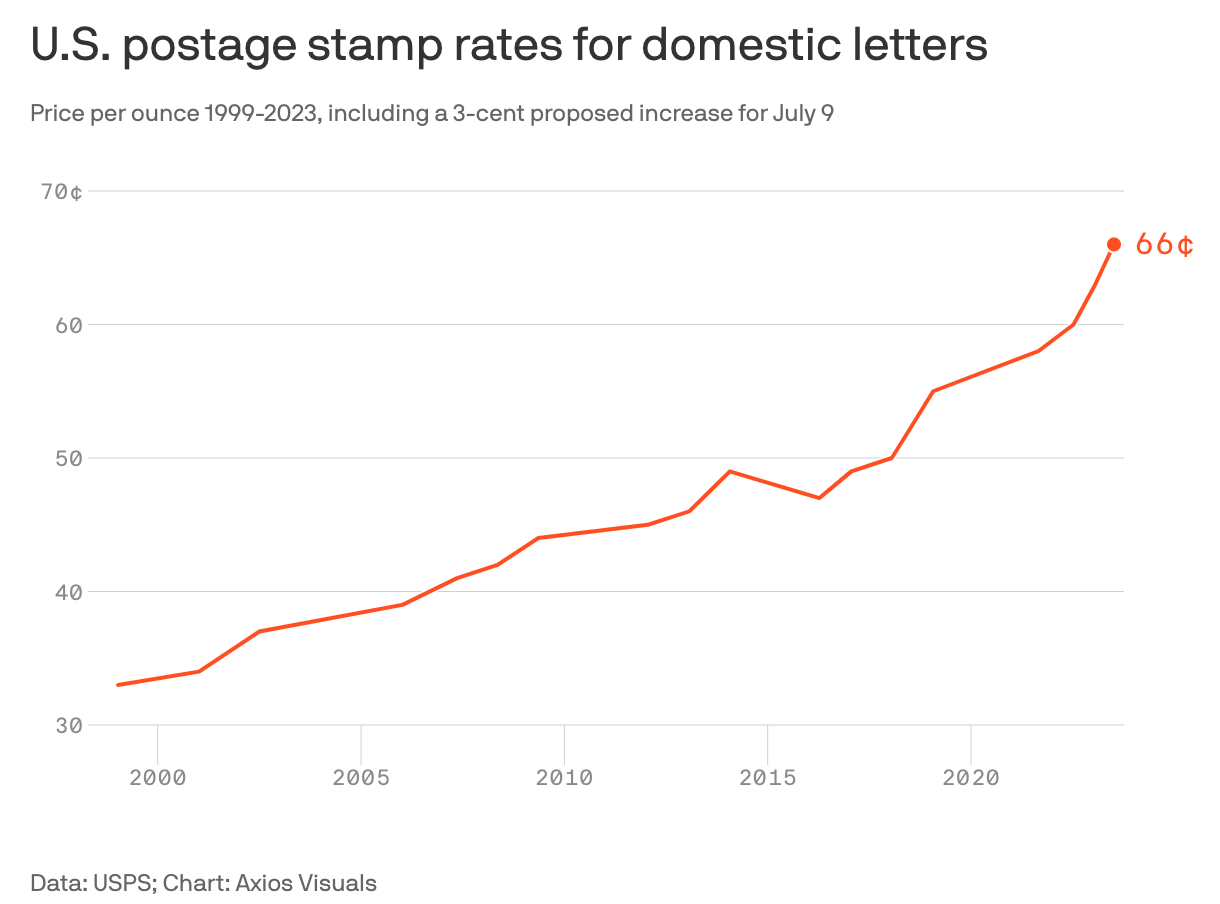
It’s pretty jarring. It looks and feels like a sharp ascent. In fact, the price of a stamp has essentially doubled since the late ‘90s!
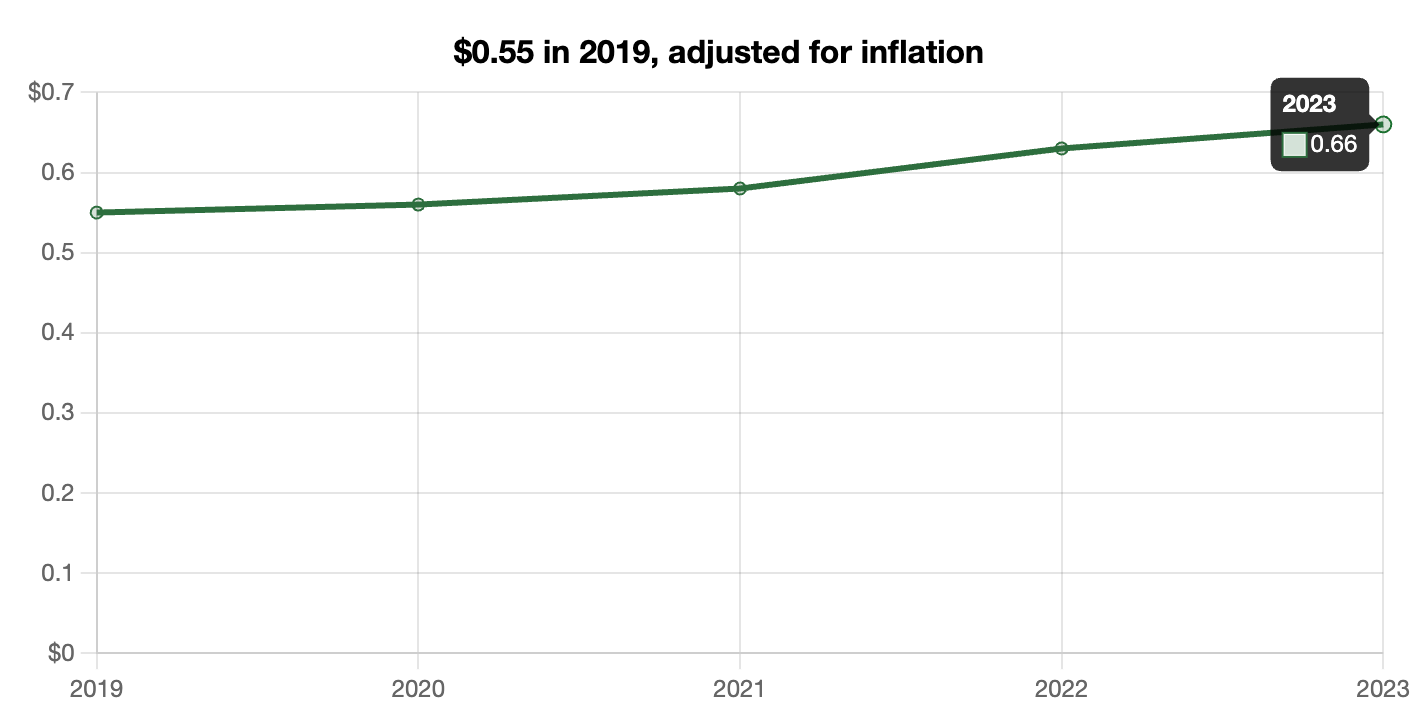
However, in real dollar, inflation-adjusted, terms the price is almost totally flat.
For example, the cost of a stamp in 2019 was 55 cents. Adjusted for inflation, depending on your exact calculation and inputs, that equates to 66 cents in 2023. Which happens to be the precise real cost of a stamp in 2023.
What is this phenomenon?
Well , Milton Friedman famously said:
Inflation is always and everywhere a monetary phenomenon.
He was arguing that inflation was solely caused by a prior increase in the supply of money or in the growth rate of the supply of money. Meaning, governments are responsible for inflation.
But let’s look at that price doubling from the late ‘90s to today in a different way. The annual inflation rate from the late ‘90s to today, on average, is under 3% — say around 2.5% by my calculations. A very low inflation environment compared to prior decades. Yet, still, people get alarmed in the face of these data.
This phenomenon can be seen from a different angle in the low-wage debate, e.g., the conversation around a $15 minimum wage.
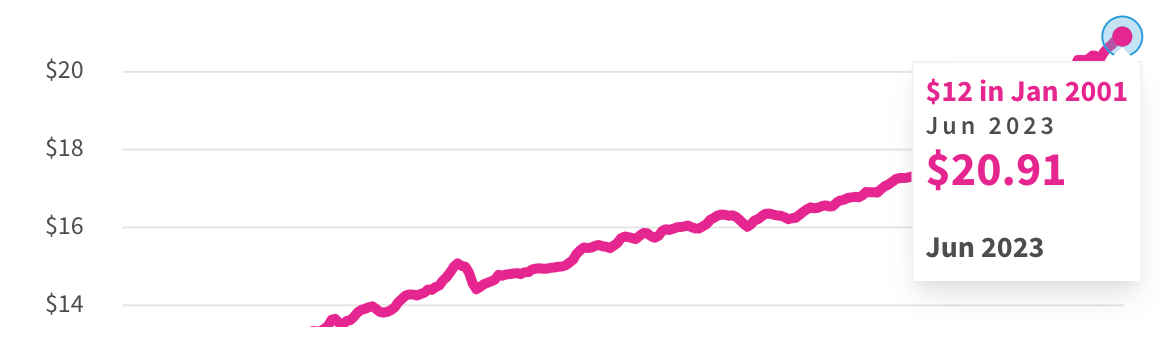
Over this same time period, given a ~2.5% inflation rate annually, what used to be a $12 hourly wage now needs to be nearly $21 to have inflation-adjusted parity.
All this shows how hard it is for our mere human brains to comprehend compounding over time.