
Electricity generation, household costs, and how it relates to the future of national cybersecurity

Electricity costs for U.S. households have increased nearly 50% since 2020.
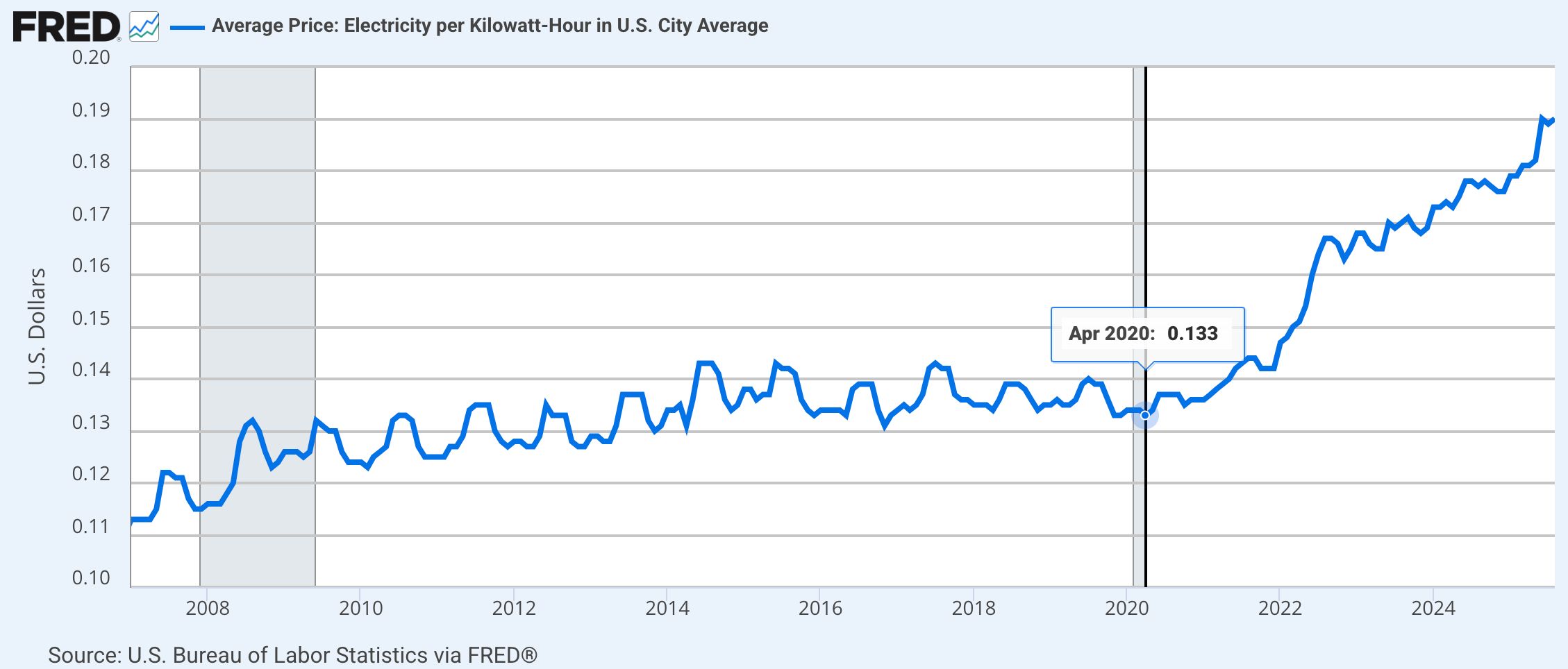
This is about 2x the general cumulative inflation during the period.1
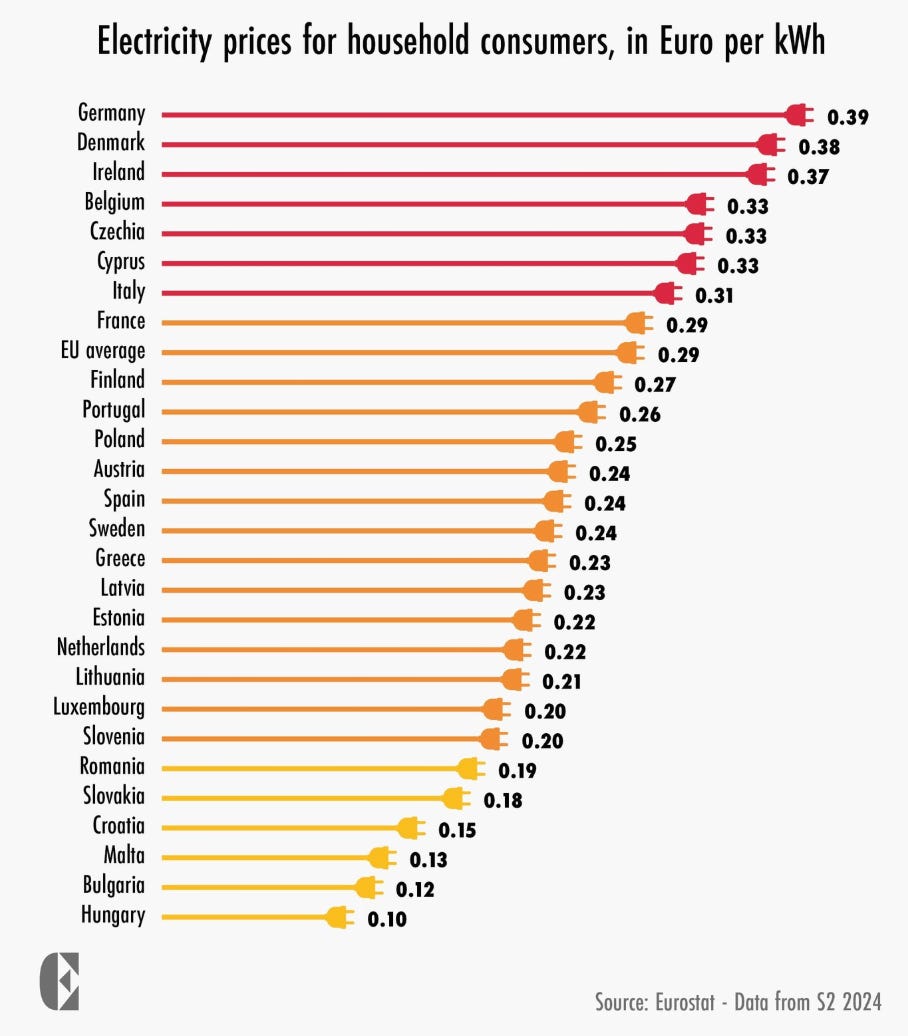
Across the pond, household costs are even higher — by some estimates closer to 0.30 EUR or 0.34 USD per kWh.
Back in the U.S., essentially the same 40-50% price increase is projected over the next five years. If the U.S. does the wrong things, just as many of the European Union countries have, the increases could be steeper.
Projections from even as recent as earlier this year don’t contemplate a scenario in which the compute needs of the hyperscalers grow exponentially.
On the surface this would be a negative, as this could increase prices. But there’s the other side of that coin where the hyperscalers are already working directly with the power generators and grid operators to build additional capacity. There’s a scenario where, now that this is a known problem, it will be fixed. Whereas without the massive new generation need, this would have slowly snuck up on us.
Supply side solutions are key to an abundant society. On the other side of the world, China has been building it’s power generation supply muscle relentlessly.
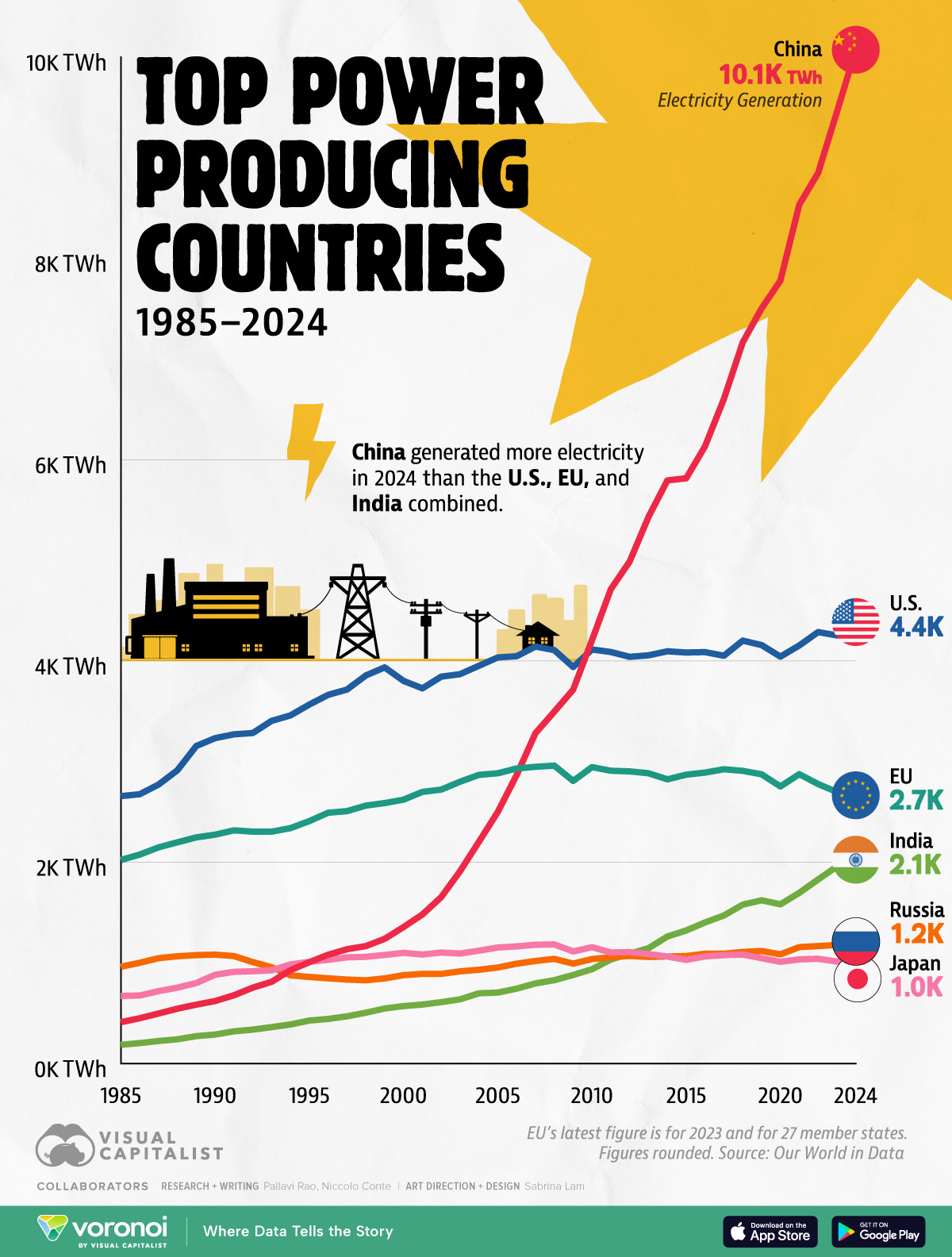
Not only would a decrease in household electricity be a boon for the U.S. economy, but there’s another angle. If we are headed to a world in which there are increasingly powerful A.I.-models, then cyber-security defense is the new national security defense. In that case, power generation is a critical foundation.2
A critical misstep during World War II for Germany was mismanagement of oil reserves. Germany could not obtain the amount of oil it needed. Conversely, the U.S. produced around 60% of the world’s oil at the time.3
Once again the U.S. should prioritize energy abundance as has been written here before as early as 2021.
One initial reason for starting writing this was about how, if your house is relying on the electric grid, it may have been a mistake to increase your household’s dependence on electricity through, for example, an electric car. The order of operation should be retrofitting a home with solar panels and a batteries to move your home from energy buyer to energy supplier, and then an only then, add on the electric car.
Power generation is critical regardless of the proliferation of A.I., e.g., for cheaper manufacturing and so on.
This is likely a driver of Germany forcing an invasion of Russia to control Baku and the Caucasus oil fields. In Daniel Yergin’s The Prize he says, “…the road to defeat was paved with oil shortages.”